Fields of Battle: Retracing Ancient Battlefields by Richard Evans
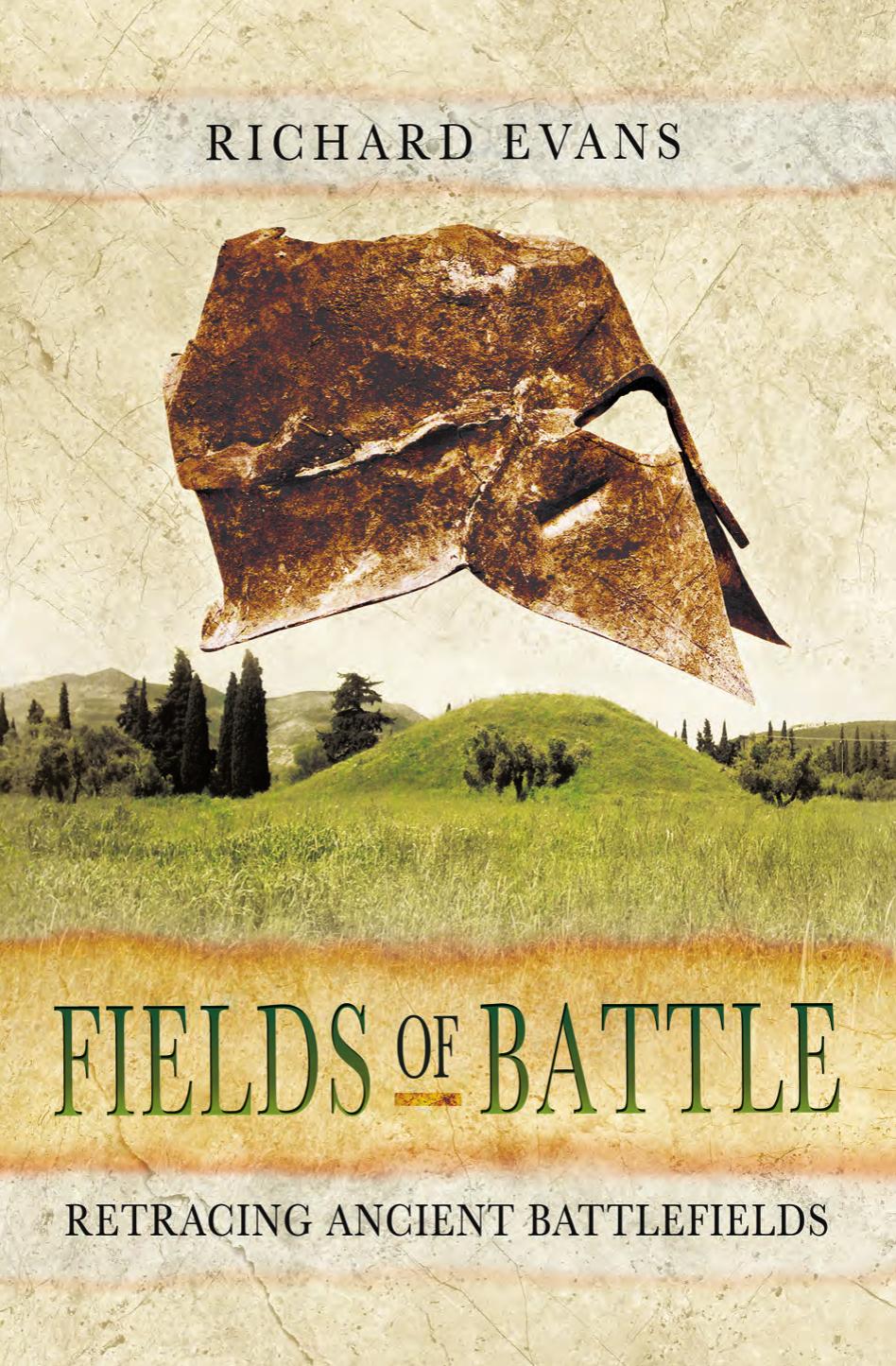
Author:Richard Evans [Richard Evans]
Language: eng
Format: epub, pdf
Ita multorum mensium labor hostium perfidia et vi tempestatis puncto temporis interiithostes.
Thus the work of many months perished in an instant because of the treachery of the enemy and the forces of the weather (BC 2.14).
Following this salutary experience, Trebonius was keen to redouble efforts to conclude the siege and actually utilized the disgust of his soldiers not only at the breaking of a truce but also at the total loss of their previous labours. Now another puzzling item of information, or lack of it intrudes into the narrative, for Caesar is at pains to describe how a new form of ramp was constructed against the city wall that did not have to rely on timber, which was in very short supply since most trees even at some distance from Massilia had been cut down either for use in building siege machines or for the Roman camp. The ramp seems to have constructed with a brick framework (BC 2.15) rather than of wood but again hardly seems specifically placed at Massilia and appears to have, anyway, contained a great deal of timber either as filling with rocks and soil and also for roofing. This section is arguably another place where Caesar short of reliable material about what was precisely happening outside the city chose to fill out his account using a more general source about siege practice. The Massiliotes watched this rapid turnabout in the fortunes of the besiegers with dismay and must surely have realized that now there was little room for further manoeuvre. Moreover, by now news must have filtered through of Caesar’s victory over Afranius and Petreius and following that the surrender of Hispania Ulterior by Varro. There must have been public meetings in the city to come to some agreement about what to do next although the options were few and far between; they evidently decided to sue for peace.
Caesar came to supervise the siege immediately after leaving Tarraco, his pacification of the whole of Iberia now complete. He states (BC 2.22) that the Massiliotes were worn out by the desperate nature of the siege and had no hope of success following their defeats on sea and on land but also notes that the city had been in the grip of disease probably caused by overcrowding and a paucity of supplies. Domitius was informed that the city was about to surrender to Caesar and so he and his closest followers commandeered three vessels, which were not necessarily warships since he managed to slip out of the harbour during a storm. The Roman ships enforcing the embargo reacted as quickly as they could in the circumstances and pursued the enemy. Domitius escaped but the two ships with him returned to the city rather than fall into the hands of Brutus’ fleet. Caesar ordered that all arms and siege equipment employed by the Massiliotes be handed over together with any surviving warships. They were also instructed to produce any money (‘pecunia’) either in the form of coin or in silver or gold bullion from the public treasury to pay for the costs of the siege against them.
Download
Fields of Battle: Retracing Ancient Battlefields by Richard Evans.pdf
This site does not store any files on its server. We only index and link to content provided by other sites. Please contact the content providers to delete copyright contents if any and email us, we'll remove relevant links or contents immediately.
| Africa | Americas |
| Arctic & Antarctica | Asia |
| Australia & Oceania | Europe |
| Middle East | Russia |
| United States | World |
| Ancient Civilizations | Military |
| Historical Study & Educational Resources |
The Radium Girls by Kate Moore(12089)
100 Deadly Skills by Clint Emerson(4968)
Rise and Kill First by Ronen Bergman(4833)
The Templars by Dan Jones(4731)
The Doomsday Machine by Daniel Ellsberg(4538)
The Rape of Nanking by Iris Chang(4255)
Killing England by Bill O'Reilly(4041)
Stalin by Stephen Kotkin(4003)
Hitler in Los Angeles by Steven J. Ross(3974)
12 Strong by Doug Stanton(3575)
Hitler's Monsters by Eric Kurlander(3384)
The Code Book by Simon Singh(3249)
Blood and Sand by Alex Von Tunzelmann(3238)
Darkest Hour by Anthony McCarten(3161)
The Art of War Visualized by Jessica Hagy(3041)
Hitler's Flying Saucers: A Guide to German Flying Discs of the Second World War by Stevens Henry(2777)
Babylon's Ark by Lawrence Anthony(2716)
Tobruk by Peter Fitzsimons(2558)
The Second World Wars by Victor Davis Hanson(2553)
